
01 — Risk
Beds Nobody Can Find
An admitted ED patient waits four hours for a bed that has actually been ready for two — because there is no live view of cleaning and occupancy status across the wards.

Built for Hospital Operations
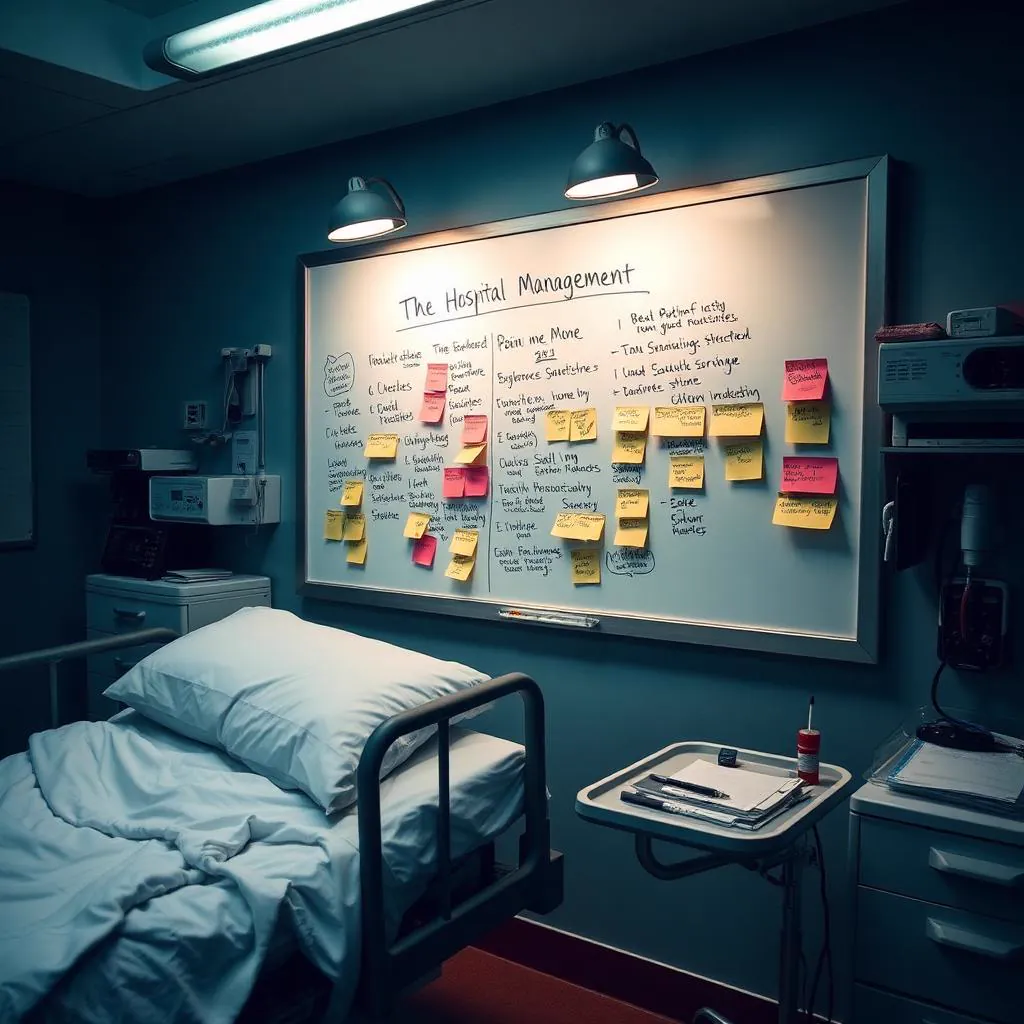
Modern hospitals cannot run on whiteboards, walkie-talkies and gut feel. Our Hospital Operations & RTLS platform combines real-time location intelligence, bed management, environmental monitoring and staff safety into a single operational nervous system — so leaders see the whole hospital, live, and every workflow moves faster than the phone tree it replaces.
Without live location and operational data, small delays compound into hours of lost productivity, unsafe conditions and capital wasted on the wrong problems.
An admitted ED patient waits four hours for a bed that has actually been ready for two — because there is no live view of cleaning and occupancy status across the wards.

Nurses spend an hour a day searching for infusion pumps, wheelchairs and vital signs monitors — because inventory location lives in memory, not in a system.
A vaccine fridge drifts out of range overnight. No one notices until morning rounds — and thousands of dollars of stock is discarded, unreported until the next audit.

A staff member facing an aggressive visitor cannot reach a phone. There is no wearable alert, no location broadcast, no automated escalation — help arrives too late.

The executive team plans capital investment based on gut feeling — because true equipment utilization, room dwell time and bottleneck data simply do not exist.
A unified operational platform that turns your buildings into live, queryable, actionable data — so every decision runs on fact, not folklore.
Track staff, patients and equipment across every corridor, ward and OR with sub-meter precision using BLE, Wi-Fi, UWB or infrared tags — whichever fits your building and budget best.
See every bed, room, cleaning status and occupancy in real time. Turnover automatically triggers housekeeping requests, so beds move from occupied to available without a single phone call.
Locate every infusion pump, wheelchair and portable X-ray in seconds. Utilization dashboards reveal which assets sit idle and which are chronically short — data your capital planning has never had before.
Wearable duress buttons let staff summon help instantly with their exact location — with automated escalation to security and clinical response teams if help does not arrive in seconds.
Continuous, wireless monitoring of fridges, freezers, pharmacy vaults and operating room temperature and humidity — with automated alerts before excursions become excursions.
Track patients from admission through every waiting area, treatment room and diagnostic step. Bottlenecks surface on live dashboards long before they become complaints.
RFID-tagged inventory automatically decrements as items are used. Reorder points trigger requisitions without manual counting. Waste and stockouts drop together.
Staff badges, patient wristbands and equipment tags stream location data into the platform. A digital twin of the hospital updates continuously — every asset, every bay, every person accounted for.
Reduction in average bed turnover time from discharge to next admission
Fewer lost equipment incidents thanks to real-time asset tracking
Faster staff duress response with location-aware alerts
Continuous cold chain and environmental monitoring, audit-ready
Typical ROI recovered inside 24 months through shorter bed turnover, reduced equipment loss and avoided cold chain wastage — with structured business-case reporting built in from day one.
Bed status flows into your HIS. Equipment tickets flow into your CMMS. Environmental alerts flow into pharmacy and lab systems. Staff safety alerts flow into your security platform. Every signal reaches the team best placed to act on it.
We support Bluetooth Low Energy (BLE), Wi-Fi, Ultra-Wideband (UWB), infrared and RFID — often blended in the same deployment. The right mix depends on the accuracy your use cases require and the buildings you operate in. Our team assesses this during site design.
No. Most deployments overlay onto your existing network with battery-powered anchors and tags — no structural cabling required. On new builds and major renovations, we design cabling into the plans for optimal accuracy.
A single-ward pilot goes live in 4 to 6 weeks. Full hospital deployments typically take 4 to 9 months depending on square footage, use case scope and integration complexity. Every project ships in phases with measurable outcomes at each stage.
Yes. Bed status flows into your HIS, equipment work orders flow into your CMMS, and environmental alerts flow into pharmacy and lab systems — all over HL7 FHIR, REST APIs and prebuilt connectors for major platforms.
Yes. Patient tags stream only inside the facility. Data is encrypted, access is role-based with full audit trails, and retention policies are configurable per tenant — aligned with HIPAA, GDPR and regional privacy regulations.
Clients typically recover investment within 12 to 24 months through reduced bed turnover time, lower equipment shrinkage, avoided cold chain losses and reduced overtime spent searching. Business case modelling is included in the pre-sales phase.
Yes. Alerts route through the RTLS network itself — they do not depend on cellular or Wi-Fi being reachable from the wearable location.
Faster turnover. Fewer lost assets. Safer staff. Protected cold chain. Capital decisions grounded in truth. Every improvement your operations team wants starts with knowing where everything actually is.
Phased deployment. Measurable outcomes at every stage. Dedicated support from day one.
Let's Get Started
We're ready to help with your digital transformation. Get in touch with our experts within 24 hours.
“From day one, the level of professionalism and technical expertise was outstanding. They turned our complex requirements into an elegant, scalable solution.”