
01 — Challenge
Documentation Burden Is Burning Out Clinicians
Clinicians spend more time typing into the EMR than looking at patients. Documentation is the number-one driver of clinician burnout and attrition in every recent workforce study.
Secreta Clinical AI & Documentation
Clinical AI is only useful if clinicians trust it and regulators accept it. Secreta Clinical AI & Documentation combines an ambient voice scribe, structured note generation, real-time decision support and automated coding into a single, EMR-integrated, bilingual and fully governed platform — so your clinicians get their time back, your coding gets tighter, and your medical AI committee gets the audit trail it needs.
Clinicians spend more time typing into the EMR than looking at patients. Documentation is the number-one driver of clinician burnout and attrition in every recent workforce study.

Copy-forward, template-driven notes have become optimized for billing, not for clinical communication — degrading the very record that downstream care depends on.

Manual coding lags the encounter by days, misses documented conditions, and generates preventable denials — leaving significant realized revenue on the table every month.
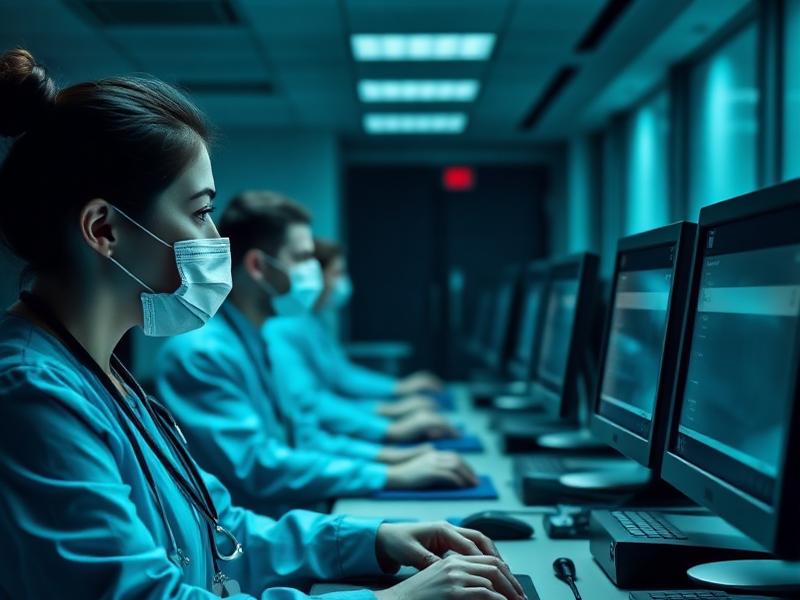
Point-solution AI scribes live outside the EMR, without governance, audit trails or bilingual support — creating clinical safety, compliance and integration risk instead of solving it.
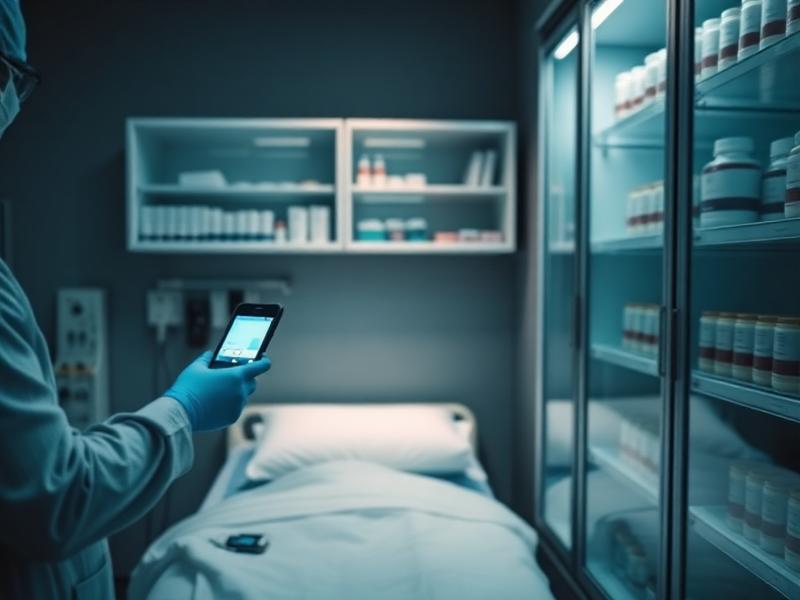
Most organizations deploy AI without model validation, drift monitoring, override tracking or a medical AI committee — a posture regulators are moving quickly to end.
Most clinical AI tools were built for English-only workflows. Arabic medical terminology, RTL rendering and bilingual patient-facing outputs are handled poorly or not at all.
Eight integrated capabilities that cover the encounter end to end — from ambient capture through coding, CDS and discharge — inside your existing EMR, in Arabic and English.
Passive, always-on ambient listening during the encounter transcribes the clinician–patient conversation, structures it into a SOAP note and files it into the EMR — with the clinician reviewing and signing rather than typing.
Free-text dictation, ambient audio and captured findings are transformed into fully structured clinical notes with diagnoses, orders, plans and coded problem lists — ready for billing, coding and downstream analytics.
Evidence-based prompts, guideline reminders, drug–drug and drug–allergy checks and sepsis / deterioration alerts surface at the point of decision — not buried inside menus after the moment has passed.
The assistant proposes ranked differentials from presenting complaints, vitals, labs and history — with cited evidence and recommended next investigations that the clinician confirms, edits or discards.
ICD-10, CPT and country-specific codes are suggested directly from the documented encounter with confidence scores and evidence spans — reducing coder queries, denials and revenue leakage.
Discharge summaries, referral letters and patient-friendly instructions are drafted automatically from the encounter — bilingual, formatted to local regulator templates and ready for clinician sign-off.
Every AI-generated artifact — notes, summaries, patient instructions, coding rationales — is fully functional in Arabic and English, with proper medical terminology handling in both languages.
Every AI output is versioned, attributable and reviewable. Model performance, drift and clinician override rates are monitored continuously with governance dashboards for the medical AI committee.
Seven sequenced stages that take clinical AI from concept to safe, adopted daily use across your specialties and sites.
We map the specialties, encounter types, documentation templates and coding workflows in scope — and identify the highest-value opportunities for AI-assisted documentation.
Validated outcomes from clients running the full Secreta Clinical AI program.
Reduction in average clinical documentation time per encounter across piloted specialties
Hours per clinician per day returned to direct patient care after full ambient scribe rollout
Reduction in coding-related claim denials after auto-coding and evidence-linked charge capture
Clinician acceptance rate of AI-drafted notes after review, across primary care and specialty settings
Clinical AI only works when it lives inside the clinician's workflow. Secreta Clinical AI integrates directly with the EMR, coding, e-prescribing, imaging and messaging systems already in daily use.
Yes. Every AI-generated note is a draft that requires clinician review and sign-off before it becomes part of the medical record. The assistant surfaces evidence spans from the transcript alongside each statement, and all inputs and outputs are logged for audit. Nothing is filed silently, and no clinical action is taken without a human decision.
Ambient capture, transcription, note generation and patient-facing artifacts all operate natively in Arabic and English, including code-switched encounters. Medical terminology is normalized in both languages, and outputs preserve the language the clinician chooses for the record and the language the patient needs on their instructions.
Deployments run on in-region infrastructure aligned with your local data protection regime — Saudi PDPL, UAE Federal Decree-Law 45, and equivalent GCC frameworks. Raw audio retention is configurable, encryption at rest and in transit is standard, and no data is used to train shared models without explicit contractual opt-in.
No. The assistant integrates with your existing EMR through HL7 FHIR and standard interoperability profiles. Notes, orders, problems and coded artifacts are filed back into the EMR of record. Where EMR capabilities are limited, the assistant surfaces its own review workspace without displacing the EMR.
A medical AI governance dashboard tracks clinician acceptance rates, edit distance on drafts, coding accuracy, override reasons, safety-relevant flags and drift indicators by specialty and site. Findings feed a monthly medical AI committee review, and thresholds trigger automatic retraining or prompt revision cycles.
Give your clinicians their time back, tighten your coding, and give your medical AI committee the audit trail it needs — all on one governed platform. See it running on a real encounter in your specialty.
Deployment support in Arabic and English. GCC and international experience. Pilots typically live within 6 weeks.
Let's Get Started
We're ready to help with your digital transformation. Get in touch with our experts within 24 hours.
“From day one, the level of professionalism and technical expertise was outstanding. They turned our complex requirements into an elegant, scalable solution.”