Healthcare organizations are under continuous pressure to improve patient experience, reduce administrative burden, and maintain strict regulatory compliance—all while operating in real time. Static digital signage and disconnected front-desk systems can no longer support the complexity of modern care delivery.
Interactive display technology, when integrated with core healthcare platforms, is evolving into a critical operational interface. It is no longer just a touchscreen—it is a real-time data node within the healthcare ecosystem.
This article explores how interactive display technology powers healthcare kiosks and smart facilities through real-time data integration, and why it has become a strategic component of digital transformation in healthcare.
Interactive kiosks for wayfinding in public buildings: From Passive Screens to Real-Time
Traditional digital displays provided one-way communication: announcements, directions, and marketing messages. Modern healthcare environments require bi-directional interaction.
Interactive display technology enables:
- Live synchronization with core systems
- Secure patient self-service workflows
- Real-time operational visibility
- Automated administrative processing
- Data capture directly into clinical and financial systems
In advanced facilities, these displays are integrated with:
- Hospital Information Systems (HIS)
- Electronic Medical Records (EMR)
- Enterprise Resource Planning (ERP) systems
- Insurance validation gateways
- Payment processing systems
- Government health platforms
Interactive Display Technology in Healthcare Kiosks


Healthcare kiosks are the most visible implementation of interactive display technology. However, their true value lies in backend integration—not the hardware itself.
Core Use Cases
1. Patient Self Check-In
- Identity verification
- Appointment confirmation
- Insurance validation
- Co-payment processing
- Automatic status update in HIS
2. Real-Time Queue Management
- Dynamic queue assignment
- Priority handling (urgent cases)
- Doctor availability synchronization
3. Digital Consent & Documentation
- Electronic signature capture
- Direct upload to EMR
- Audit trail creation
4. Financial Transactions
- Outstanding balance display
- Insurance coverage breakdown
- Instant ERP ledger update
Real-Time Integration Flow
A fully integrated kiosk environment operates as follows:
Kiosk Interface
↕
Hospital Information System (HIS)
↕
Insurance Gateway
↕
ERP Financial System
↕
Payment Processor
Every patient interaction updates multiple systems simultaneously, eliminating duplication and reconciliation delays.
Smart Healthcare Facilities Beyond the Kiosk

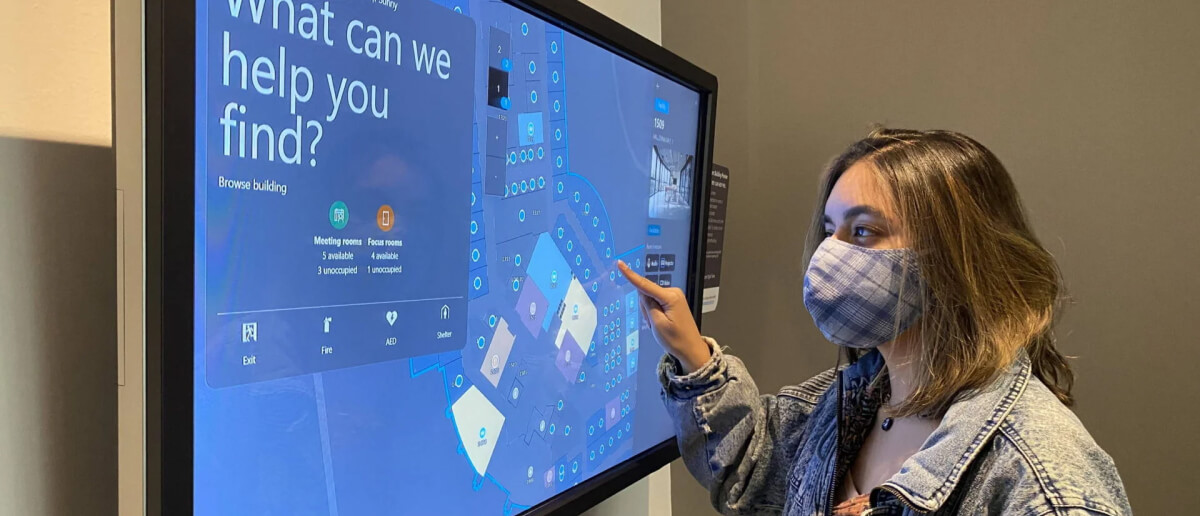
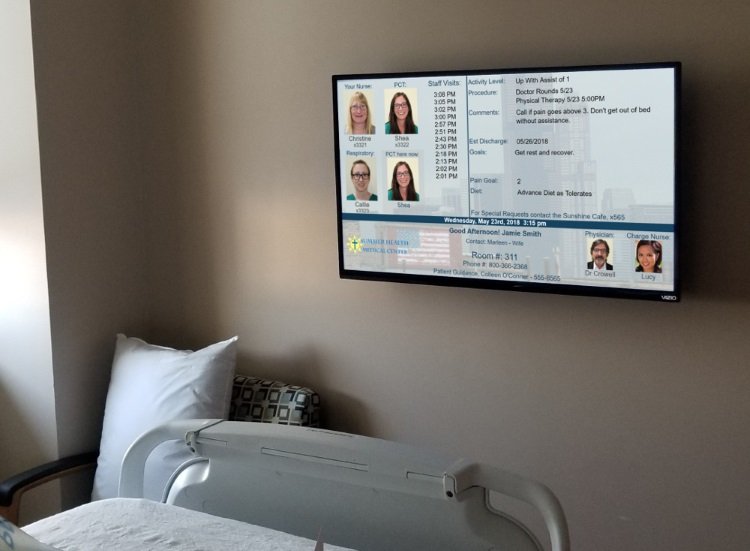
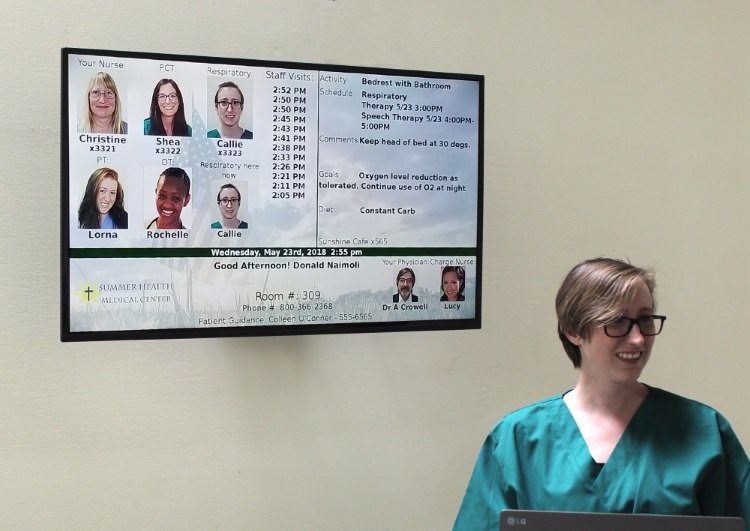
In modern smart facilities, interactive displays extend across the entire infrastructure.
1. Interactive Wayfinding Systems
- Real-time clinic routing
- Departmental load balancing
- Appointment-based navigation
2. Smart Waiting Room Dashboards
- Live queue tracking
- Appointment status updates
- Automated delay notifications
3. Patient Room Digital Boards
- Updated care plans
- Assigned medical team
- Medication schedules
- Discharge timelines
4. Command Center Displays
- Bed occupancy tracking
- Emergency department capacity
- Operational KPIs
- Facility-level analytics
These displays are connected to:
- Bed management systems
- Laboratory Information Systems (LIS)
- Radiology systems
- Facility management platforms
- IoT medical devices
They transform the hospital into a data-driven environment.
The Architecture of Real-Time Data Integration
To understand the role of interactive displays, we must examine the technical stack.
1. Presentation Layer
- Touch-enabled displays
- Secure kiosk operating system
- User interface software
- Multi-language support
- Accessibility compliance
2. Integration Layer
- APIs
- HL7 / FHIR interoperability standards
- Middleware
- Message brokers
- Real-time synchronization engines
This layer ensures that interactions are validated, authenticated, and transmitted securely.
3. Core Systems Layer
- Hospital Information System (HIS)
- Electronic Medical Records
- Enterprise Resource Planning (ERP)
- Billing and financial modules
4. External Ecosystem
- Insurance payers
- Government health authorities
- Payment gateways
- Identity verification platforms
Without proper integration architecture, interactive displays become isolated endpoints instead of operational control interfaces.
Operational Impact of Real-Time Integration
For Patients
- Reduced waiting times
- Greater transparency in care process
- Faster admission and discharge
- Less paperwork
- Improved overall experience
For Clinical Staff
- Reduced administrative interruptions
- Accurate patient status updates
- Fewer manual data entries
- Lower documentation errors
For Management
- Real-time occupancy visibility
- Queue bottleneck identification
- Revenue cycle transparency
- Performance monitoring dashboards
- Predictive capacity planning
The key advantage is immediacy. Decisions are based on live data rather than delayed reports.
Security, Compliance, and Data Governance
Healthcare environments are highly regulated. Interactive display systems must adhere to strict data protection standards.
Critical requirements include:
- End-to-end encryption (data in transit and at rest)
- Role-based access control
- Biometric or secure authentication
- Session timeouts
- Full audit logging
- Secure API gateways
- Compliance with regional health data regulations
If integration is not governed properly, interactive systems may increase exposure risk. Security must be architected from the beginning—not added later.
Implementation Challenges
Despite their benefits, deploying interactive display systems presents several challenges:
1. Legacy System Compatibility
Older HIS platforms may lack modern APIs.
2. Network Latency
Real-time interaction requires low-latency infrastructure.
3. Change Management
Front-desk staff and patients must adapt to new workflows.
4. Hardware Lifecycle Management
Displays require maintenance, upgrades, and monitoring.
5. Integration Complexity
Poorly designed middleware can create synchronization conflicts.
Successful implementation requires alignment between IT, operations, finance, and compliance teams.
Future Trends in Interactive Healthcare Environments
The next phase of interactive display technology includes:
- AI-driven adaptive interfaces
- Voice-enabled self-service kiosks
- Predictive queue optimization
- Integration with wearable devices
- Edge computing for faster processing
- Personalized patient interfaces based on EMR data
Interactive displays will increasingly function as intelligent nodes rather than simple terminals.
Conclusion: Interactive Displays as a Healthcare Control Layer
Interactive display technology is no longer a cosmetic upgrade for healthcare facilities. When integrated properly, it becomes a real-time operational control layer.
It connects patients, clinicians, administrators, and financial systems into a synchronized ecosystem. It reduces friction in patient journeys. It enhances visibility across departments. It strengthens revenue cycle accuracy. It supports compliance through structured data capture.
Most importantly, it transforms healthcare facilities from reactive environments into responsive, data-driven systems.
In modern healthcare infrastructure, interactive display technology is not just about touchscreens—it is about structured, real-time intelligence embedded into the physical environment.